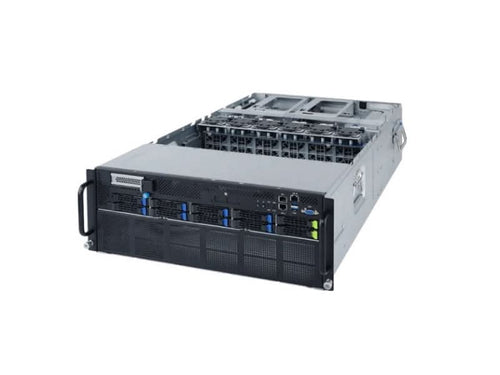
Servers for Enterprise Data Protection and Scalable Storage

Storage Servers

Secure your data with purpose-built Storage Servers, Backup Servers, Enterprise Storage Servers, and Disaster Recovery Servers engineered for high-capacity, high-availability, and rapid recovery. Saitech delivers NAS Storage Servers, SAN Storage Servers, NVMe Storage Servers, RAID Storage Servers, and Hybrid Storage Servers for mission-critical data management and Cloud Backup Servers.

  • High capacity, Zero downtime, Data resilient.
  • Optimized for backup, DR, NAS, SAN, and NVMe.
  • Scalable, Reliable, Recovery-ready.
Storage Servers

Frequently Asked Questions

What are Storage Servers used for in modern IT environments?

Storage Servers are designed to securely store, manage, and distribute large volumes of business data. Organizations use them for file sharing, virtualization storage, databases, backups, and archiving while maintaining high availability, scalability, and performance across their IT infrastructure.

How do Backup Servers help protect business data?

Backup Servers create secure copies of important files, applications, and systems so organizations can recover information after accidental deletion, system failure, or cyber incidents. Automated backup schedules and rapid restore options help minimize downtime and prevent permanent data loss.

What makes Enterprise Storage Servers suitable for large-scale deployments?

Enterprise Storage Servers are built for demanding environments that require high capacity, reliability, and performance. Features such as redundant components, scalable storage architecture, and high-speed connectivity allow organizations to manage massive datasets and support mission-critical applications.

What are NAS Storage Servers and when should businesses use them?

NAS Storage Servers provide centralized file storage that can be accessed by multiple users over a network. This approach simplifies file sharing, improves collaboration, and allows teams to store and manage documents, media, and project files from a single location.

How do SAN Storage Servers differ from other storage solutions?

SAN Storage Servers deliver block-level storage through dedicated high-speed networks, allowing applications to access data directly at a very fast rate. This type of architecture is commonly used for high-performance workloads such as databases and virtualization platforms.

How do Data Backup Servers improve disaster preparedness?

Data Backup Servers store protected copies of critical information, so systems can be restored quickly in the event of hardware failure, cyberattacks, or operational errors. This helps organizations maintain continuity and reduce the impact of unexpected disruptions.

What role do Disaster Recovery Servers play in business continuity?

Disaster Recovery Servers replicate important data to secondary systems or locations, allowing organizations to restore operations quickly after a disruption. This ensures that essential services and applications remain available even during major outages or emergencies.

Why are Rackmount Storage Servers commonly used in data centers?

Rackmount Storage Servers are designed to fit into standardized racks, helping organizations maximize space while organizing hardware efficiently. This setup also makes it easier to scale infrastructure, perform maintenance, and manage large storage environments.

What advantages do NVMe Storage Servers provide for performance-intensive workloads?

NVMe Storage Servers deliver extremely fast data access with very low latency, making them ideal for applications that require rapid processing. Examples include analytics platforms, virtual desktops, machine learning workloads, and high-performance databases.

How do RAID Storage Servers protect data from hardware failures?

RAID Storage Servers distribute or mirror information across multiple drives, so if one drive fails the system can continue operating without losing critical data. This method increases reliability while maintaining strong performance for storage operations.

When should businesses choose Hybrid Storage Servers?

Hybrid Storage Servers are ideal when organizations want a balance between speed and cost efficiency. Frequently accessed data can be stored on faster drives while less active information remains on higher-capacity disks for long-term storage.

How do Cloud Backup Servers support hybrid and cloud storage strategies?

Cloud Backup Servers allow organizations to store backup copies both locally and in remote cloud environments. This approach improves redundancy, supports off-site data protection, and provides additional scalability when storage requirements increase.

Insights & Updates

Discover the Latest Trends and Expert Insights – Explore Our Blogs

Storage Servers: Optimized Data Management for Modern Enterprises

Storage Servers: Optimized Data Management for Modern Enterprises

January 22, 2026
Read More →
ASUS XA NB3I E12 Powerful 9U GPU Server for Advanced AI and Compute Projects

ASUS XA NB3I E12 Powerful 9U GPU Server for Advanced AI and Compute Projects

November 14, 2025
Read More →
HPE ProLiant Compute ML350 Gen12 Server: Powering SMBs and Edge Computing

HPE ProLiant Compute ML350 Gen12 Server: Powering SMBs and Edge Computing

August 20, 2025
Read More →
HPE ProLiant DL380 Gen12 Server: Next-Generation Enterprise Power

HPE ProLiant DL380 Gen12 Server: Next-Generation Enterprise Power

September 05, 2025
Read More →
;ll'